

I talk to my team all the time about deposits and withdrawals.
Building trust takes deposits. Small consistent ones. Showing up when you say you will. Following through. Listening. Being honest even when it’s uncomfortable. You build up a balance over time, and that balance is what lets you navigate the hard stuff. When you have to deliver bad news or ask for something difficult, you’re making a withdrawal. And if you’ve been making deposits all along, the account can handle it.
But if you’ve only been withdrawing? If you’ve been taking and taking without putting anything back? Eventually there’s nothing left. The relationship can’t absorb anything. One hard conversation and the whole thing collapses.
I’ve used this metaphor for years, but only ever to look at individual relationships. One account at a time. I’ve never stepped back and looked at my whole life as a portfolio.
Early last year, I was in total despair. I wrote about this recently, how my world had shrunk down to the size of my laptop, how work became the only place I was investing, how a series of curveballs knocked me flat because I had nothing to fall back on.

But it really only took a few months before I felt like myself again. Not perfect. Not finished. But genuinely okay in a way I hadn’t been in years.
How did that happen? Three months from desperate to steady. What changed?
I kept turning it over, trying to understand what I’d actually done. And I kept coming back to this idea of deposits and withdrawals.
I heard someone talking about her life as a portfolio. Different areas she was trying to invest in. And something clicked.
I started thinking about my own life that way. Not just “work” and “everything else,” but four real areas where my time and energy were going every day: myself, my career, my closest people, and my broader community. My health, my ambitions, my marriage and friendships, the world I was building around my daughter.
When I looked at it honestly, the picture was brutal. I’d been treating my life like it only had one account. Career. I was pouring everything into that one place and letting every other area run dry.
I wasn’t just tired. I was bankrupt everywhere except one place.
And then that one place started making withdrawals too.
When work got hard, it didn’t stay contained. The stress bled into my sleep. The anxiety lived in my chest all day and followed me home at night. I was irritable with my husband. Short with my daughter. My blood pressure was out of control. My body was keeping score.
The one area I’d been investing in wasn’t just failing to hold everything. It was actively draining the areas I’d already emptied. I had nothing in the bank and the hits kept coming.
That’s what burnout actually is. Not just exhaustion. A portfolio that’s gone to zero everywhere, with one overloaded area that’s now taking from the rest.
When I started to climb out, I didn’t do it by resting. Rest is important, but rest alone doesn’t rebuild what’s been depleted for years.
I started investing.
I set up weekly calls with my closest friends. That was an investment in my inner circle. In my sense of being known by people who knew me before all of this.
I joined a coworking space and reached out to old colleagues and mentors. That was an investment in my village. In my professional identity outside of my current job. In relationships that reminded me I had value beyond my org chart.
I started talking to other parents at the playground. Setting up playdates. Volunteering at my daughter’s school. More village. Building a life in this city I’d chosen so intentionally and then neglected for years.
I started paying attention to where my energy was going. Not just my time, but my best energy. I stopped giving my sharpest thinking to problems at work I couldn’t control. I stopped spiraling. I redirected that energy into things I could actually affect. That was an investment in myself.
Each investment was small on its own. But they compounded. The more I invested outside of work, the more capacity I had. The more grounded I felt. The more I could absorb the hard stuff when it came, because I had reserves again.
I’m sharing this because I spent years not seeing what was happening. I thought I was just tired. I thought I just needed to push through to the next milestone at work and then I’d feel better.
I didn’t need to push harder. I needed to invest differently.
And honestly, even that’s only half the picture. Where your time goes matters. But I’ve been realizing that how you spend those hours matters just as much. You can pour time into your career and feel alive doing it, or you can pour time into your career and barely remember doing it. Same area, completely different experience. I’m still working through what that means, and I’ll write more about it soon.
But the portfolio piece was the first unlock. Seeing that I had four areas of my life that needed investment, and I’d been pouring into one while the others went bankrupt.
If your life feels like it’s running on empty, it might might be because everything you’re doing is going into one place. And when that place takes a hit, there’s nothing else to hold you up.
The question isn’t just “where is my time going?”, but, “where am I investing? And where have I been withdrawing for so long there’s nothing left?”
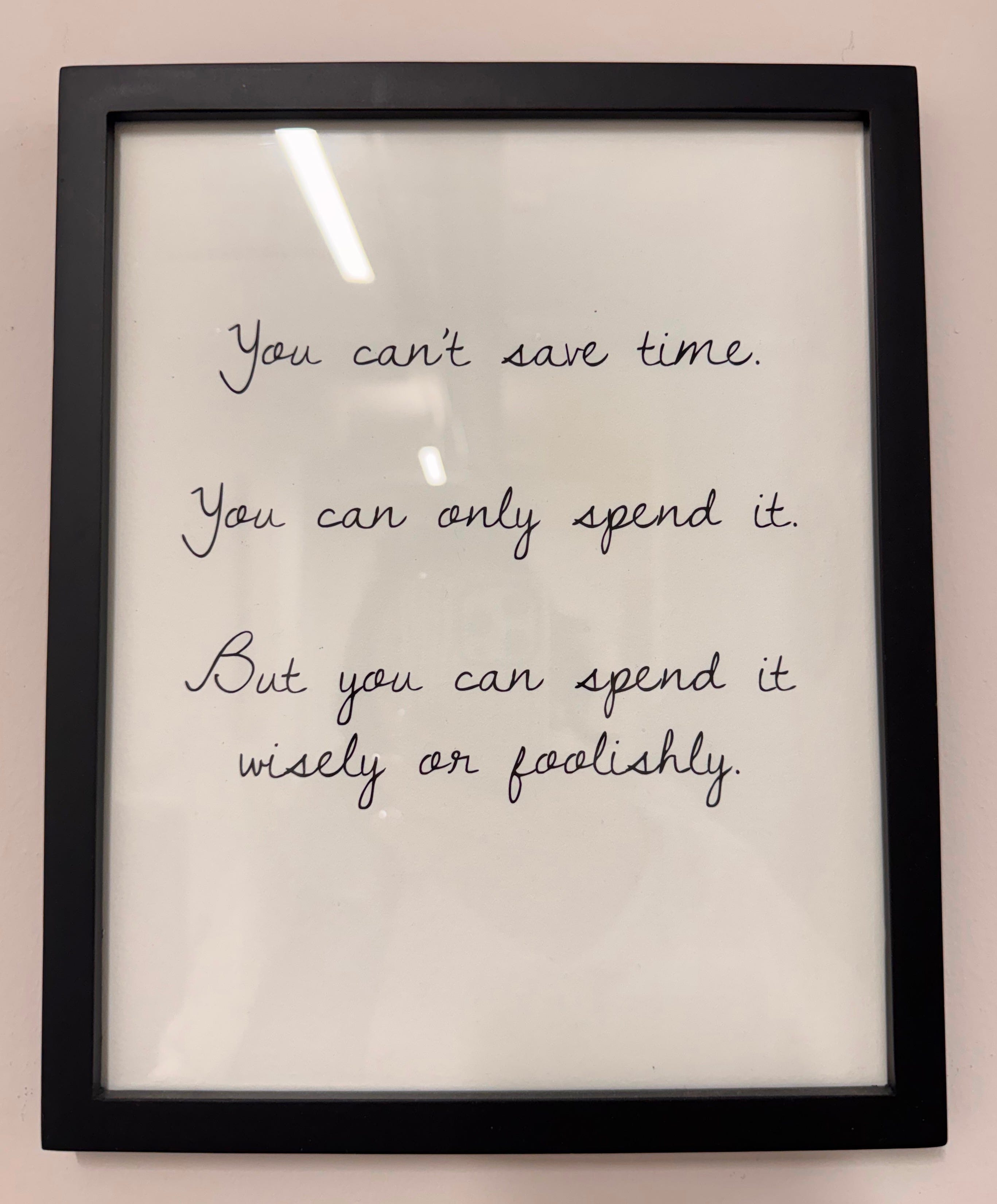
You might not like what you find when you look. I didn’t.
But it was so worth it. Because now I can see that in my recovery, I was building something. Every investment I was making—in my friendships, my community, my sense of self outside of work—was developing a capacity I hadn't known I needed. I'll write more about that soon.
Where am I investing? Is a great question to ask ourselves. This really does remind me of my reflection on burnout, but while I decided to stay with my 5 avenues, you honed in on the one that wasn’t serving you and started redirecting your energy. Good for you and I hope things have settled down and you’ve found more little p purpose!